making the record
How a band was born out of grief, cumbia, José Alfredo and a few emotional adventures. Plus the album, track by track.
Music · November 2026
Leer en español →
After Balti died a few years ago, I didn't want to make music anymore. Balti was the voice of LEZ, and without him the songs seemed to have nowhere to go.
Then, last year, something pulled me back: the new wave of Mexican urban music and corridos. I talked about it for hours with friends in the music industry, about how exciting it was to see such a powerful movement come out of Mexico again, after decades in which our music shaped the continent and then, for a while, lost its place.
I grew up listening to Mexican folk music. José Alfredo Jiménez and Chavela Vargas are my absolute idols, and “Un mundo raro”, “Las ciudades” and “Vámonos” are among the most important songs of my life. I love cumbia: dancing it, playing it, singing it. Los Ángeles Azules, and of course Los Tigres del Norte, with whom I had the privilege of working on a project, made me feel I had to make something that sounded like where I come from, as a Mexican and as a Latin American. I carry Mexican folk music and the Mayan traditions of my father’s side; Cuba lives in my imagination; and Brazil, Colombia and Venezuela are places I have traveled widely, where many people I love live.
So I called Sandoval, my old friend and accomplice from LEZ, and we started writing. I brought ideas, he brought ideas, and then we found Franco. DESVELO is the three of us: Emilio Lezama, Daniel Sandoval and Franco Trueba, with Luis Felipe Jáuregui, El Dragón, the drummer I have always worked with.
This year, after a few emotional adventures across the region (let’s leave it at that), the songs started arriving. The idea was to make something new: to bring together rhythms that are all, somehow, Latin American, from reggaeton, rap and cumbia to salsa, ranchera and corridos, often in the same song, and to use instruments nobody associates with those genres. We worked a lot on drums and percussion with El Dragón and built the melodies and lyrics on top.

It wasn’t easy. Sandoval and I have never fought as much as we did making this record; at one point I left the studio in tears. But the result made all of it worth it. We are proud of these songs and of a mix we’re not afraid to indulge, from classical music to cumbia and salsa. Most of the album celebrates the light, playful side of Latin America. A couple of songs go somewhere much sadder.


The album, track by track
- Lotería
- La Habana
- Con Quien Yo Quiera
- Destiempo
- Reina
- Nena
- Dos Estrellas
- Extraño
- Pura Metralleta
- Infinitos
- Espuma
01Lotería
The song that caused our biggest fight, the one that made me cry. At its core it’s a mix of cumbia, ska and a bit of reggaeton, and it’s Sandoval’s biggest contribution to the project. I insisted on opening it with a classical-music introduction, and after a lot of back and forth, I got my way. Lyrically it has a Café Tacvba spirit; musically it’s a strange combination that makes little sense when you explain it and complete sense when you hear it. And it ends exactly where I wanted: in a small homage to Silvestre Revueltas and to “Sobre las olas”.
02La Habana
Built in the studio by the three of us, Sandoval, El Dragón and me, experimenting with sounds. We wanted salsa, something tropical; then I had the idea of a reggaeton opening and a pop chorus, and it became a jigsaw puzzle of rap, reggaeton, pop and salsa. It’s probably the most experimental track on the album. I was thinking of my first trip to Havana with my dad, and of a girl I met there, the daughter of an important Cuban academic: the first time I walked a city’s streets with someone, and the fantasy of a summer love. The song also plays with my last name and that of one of Cuba’s greatest writers, José Lezama Lima. It’s nostalgia for the eternal bond between Cuba and Mexico, a love story that outlasts any politics.
03Con Quien Yo Quiera
One of our newest songs. It came easily, a few months ago, when I wanted to free myself from certain things and was happy, seeing someone who felt fresh, easygoing and fun after some not-so-fun relationships. I had the taste of a caimito in my head. It’s tropical, poppy and made for dancing, with a lot of Karol G in its DNA.
04Destiempo
Written by Sandoval and me in the mix room, with our eternal bass player and great friend Gabo. It’s about an on-and-off relationship with someone from Brazil: when one wants and the other doesn’t, and then it flips. A chase, but a playful one. I wanted it to feel like Rio de Janeiro and the Mexican Caribbean at the same time. I was listening to a lot of Rawayana back then, after my Venezuelan cousin introduced me to them and took me to their concert. But the song has a pop twist: I added a disco beat to the second half of the chorus, and we built an alternative pop-rock bridge that would feel more at home on a synth-pop record, or on something by Kings of Leon or The Killers, before it falls back into its tropical essence. Light, poppy, and happy to be Latin American.
05Reina
A cumbia at heart, with some electronic beats and a touch of reggae. It’s about a toxic relationship, and how many of us haven’t been in one? I was caught up in a ridiculous situation and felt something fun had to come out of it. This is what came out: a song to dance and sing along to.
06Nena
Born from an experiment with the bridge of “Reina”. I wanted to take it somewhere radical, and it didn’t work for “Reina” because it turned out too good: it became its own song, with a completely different vibe, accidentally close to Cartel de Santa, whom I admire for the quality of their rap and melodies. It’s also the first time I rapped on a song. We were playing around in the studio, I started rapping for fun, and it worked. Its central bridge has me rapping with El Dragón and then going into reggaeton. That accident shaped the whole album: after “Nena”, we started adding my raps to other songs. And El Dragón’s drums here are so powerful you feel them vibrating inside you.

07Dos Estrellas
The most autobiographical song I’ve ever written. It’s a rap about my last relationship, which mattered a lot to me, but also about who I am and how I’m built: how I define myself by refusing to be defined. It names some of my idols and the things I love. I imagine myself walking across Mexico City to Reforma, talking about how the city shaped me and the relationships it brings back. I packed so many verses into the first version that it ran about eight minutes, so we had to cut. It came fast and we recorded it fast; then Franco and I reworked the chorus until it sounded the way I had imagined it.
08Extraño
The last song we wrote, and the first one we wrote all together: the four of us in the mix room, El Dragón, Sandoval, Franco and me, with guitars and drums. Franco came up with a first verse and from there everyone kept adding pieces. Half the lyrics are his and half are mine, and the words felt like they were already there. It’s Mexican pop with a lot of reggaeton and tropical flavor. I rap again, and Franco and I trade lines: it’s the most fun song on the album in terms of how the band plays together.
09Pura Metralleta
A corrido tumbado that Sandoval and I wrote a few years ago. It’s powerful, fun and very poppy, with a twist: it has drums and synthesizers, which corridos usually don’t. And Franco’s vocals are unrecognizable; you would never guess it’s him. We pulled him far out of his comfort zone, and we love the result.
10Infinitos
One of the two saddest songs on the record. It was inspired by a long walk with a friend through the neighborhoods of Mexico City’s old center, which took me back to my university years, walking the city at night with friends, talking about poetry, art and literature. It sounds like a song about lost love, and in a way it is. But what’s really behind it is the longing for lost adventures, for the time when we pretended to be poets. Musically, it’s a mariachi pum-pam-pam. We wrote the original version two years ago, but after listening to Humbe we said “wow”, pulled it out of the bedroom and pimped it up. José Alfredo is back!
11Espuma
Probably the saddest song I’ve ever written. “Aldeida”, with LEZ, was sad too, but not like this. Neither Sandoval nor I know what genre it is. It starts with classical Mexican guitars that sound a little like “La Llorona” and opens into a beautiful, old-school piano melody, deep, as if you were on the water. It’s about loves that are light and stay on the surface, like foam on the sea, and how, even when they are washed away, they leave a mark. I had been listening a lot to Bad Bunny’s “Turista”, which I think is one of the most beautiful songs of the last twenty years; it gave me a feeling I wanted to put into my own words and my own music.

Where we are now
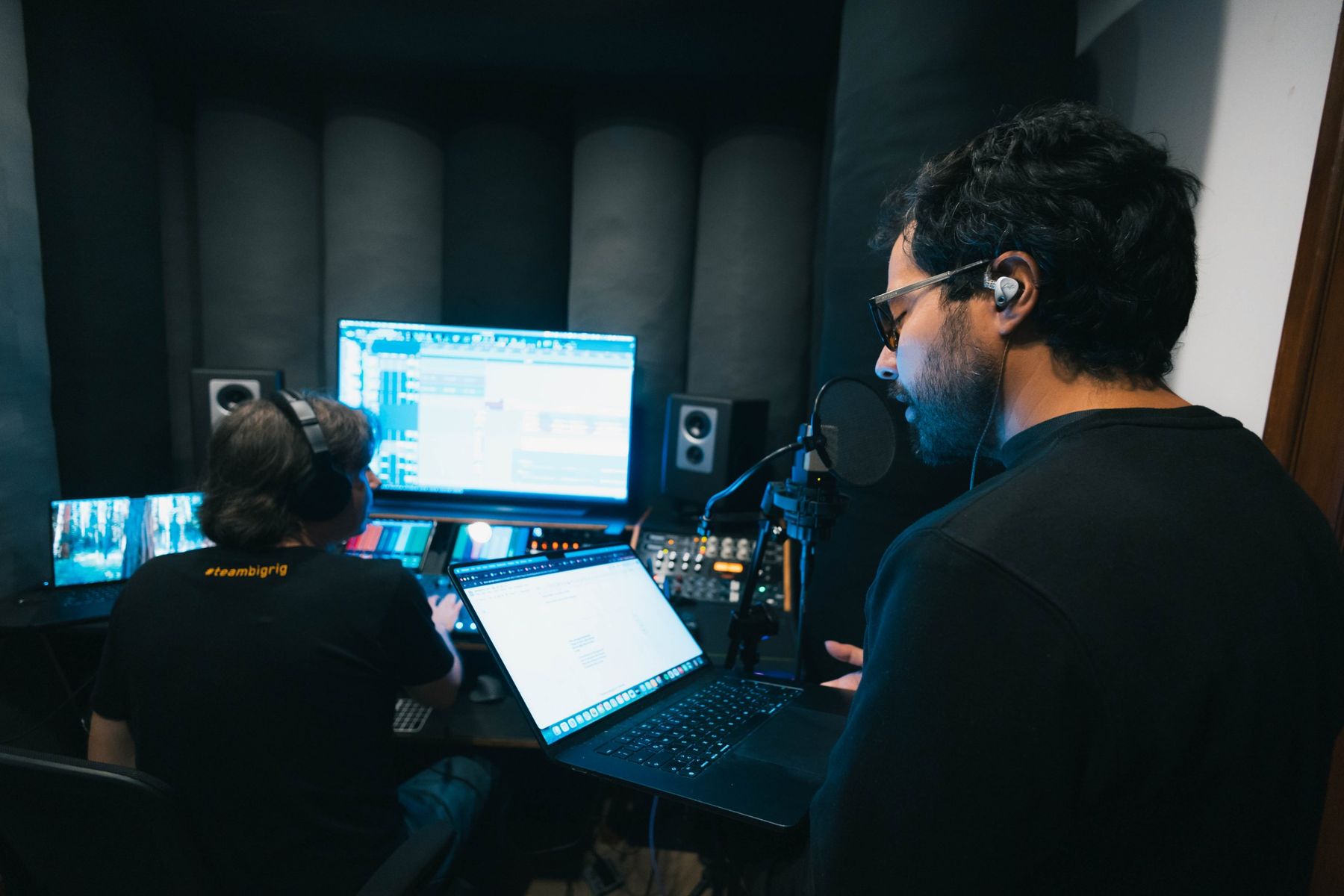
We just came out of the mix room after finishing “Extraño”, the song the four of us wrote on the spot. After more than four months making demos in Sandoval’s mix room, we have officially moved into the studio to record the album, between Babel Audio Lab and Transistor Mix Room. We can’t wait for you to hear it.
Official site: desvelo.music